How can a product operating model be built and scaled across multiple data functions to accelerate the deployment of governed data and analytics products?
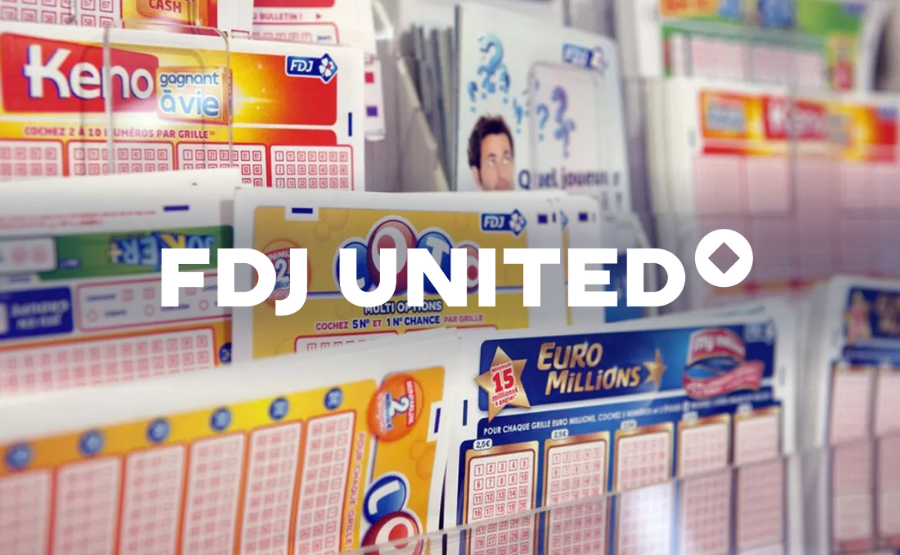
La Française des Jeux (FDJ) was publicly listed at the end of 2019. The former French monopoly then became an international group open to competition. By 2025, the Group had become a leading player in the gaming industry, offering sports betting, lotteries, poker, online gaming, and more. With €3.8 billion in revenue and operations in 13 countries, FDJ United employs over 5,000 employees. The transformation required a complete overhaul of its data and AI organization. Artefact supported FDJ United in this journey.
The challenge: Reorganizing a decentralized data system to improve team alignment
When Matthias Oehler joined the company as CTO in 2017, he found a nascent but decentralized data structure. Marketing, data, and business teams were working without a shared vision. As a result, efforts were scattered rather than focused on high-impact initiatives. This decentralization led to differing perceptions and priorities among teams.
The IPO and the introduction of GDPR changed the game. FDJ United needed to professionalize its data and AI approach and establish true governance. How could the Group align all teams? Matthias Oehler and his team tackled the challenge by building a shared vision and a common roadmap.
“This is often the first challenge: aligning decentralized structures to invest in the right priorities and rally teams around them.” Matthias Oehler, Head of Data & AI, FDJ United
Game Changer AI: Making data a Group-level priority
A key shift occurred in 2023 when Sébastien Rozanes, Chief Digital, Data & AI Officer, joined the Executive Committee. For the first time, data and AI were represented at the highest level of the organization.
“There was a collective realization that a role was needed at the ExCom level to ensure that data and AI would truly become strategic, with someone dedicating 100% of their time to this activity.” Matthias Oehler, Head of Data & AI, FDJ United
In 2024, FDJ United launched the “Game Changer AI” program to avoid dispersing efforts and focus on strategic priorities. Data and AI are used for two main business objectives:
- Enhancing the customer experience: Personalization, marketing excellence, and responsible gaming
- Optimizing operations: Fraud and anti-money laundering, customer service, commercial performance
This strategy is structured around three pillars:
- Technology: A cloud-first approach with strategic partnerships (AWS, Microsoft)
- People: Training the Group’s top 100 leaders in spring 2024 and the creation of a Data Academy to train all employees by the end of 2026
- Ecosystem: Investment of €70M, including €25M in AI, in partner startups by the FDJ United Ventures fund
The Proactive Project: Verticalizing the product approach across the data value chain
Rapid technological change requires continuous adaptation. FDJ United needed to adopt an agile mindset to adjust priorities and seize new opportunities.
It was in this context that the collaboration with Artefact began. The Proactive Project enabled FDJ United to deploy a product operating model at scale across its data value chain.
“The Proactive project is a real transformation of the culture and mindset of the teams. Ultimately, it’s all about people.” Matthias Oehler, Head of Data & AI, FDJ United
FDJ United then redefined all of its product lines around three major families:
- Analytics products: Consolidating recommendations, BI, and predictive AI aligned with Game Changer AI
- Data products: Treating data as a product to create reusable assets and avoid the proliferation of isolated data sets. A dedicated team oversees quality, accessibility, and governance
- Core products: Modernizing infrastructure to ensure scalability
Approach: Change management support by Artefact
The collaboration between Artefact and Matthias Oehler’s teams was structured around three key phases:
- Definition phase: This phase identified how to adapt product ways of working to the data domain, with its specific cycles and metrics. Teams quickly saw concrete benefits: faster delivery, more autonomy, and measurable impact.
- Demonstration phase: Rather than transforming everything at once, FDJ United isolated a few test zones. Pilot teams applied the new operating model with Artefact’s daily support. The objective: prove in practice that teams could become more efficient, faster, and more robust.
- Deployment phase: Currently ongoing, this phase mobilizes all transformation levers: reorganization, process redesign, new agile rituals, and role evolution. The organization is aligned around three-month planning cycles to continuously adjust priorities.
Product data approach: Keys to successful deployment
- Strong team integration
Artefact worked day-to-day with FDJ United teams to ensure effective knowledge transfer. Once teams experience firsthand that “it works,” adoption becomes natural. - Proof by example
To address change-related concerns and build confidence before scaling further, Pilot teams demonstrate the value of each approach with concrete results before rolling it out across the board.
“The big challenge in this transformation is the dual approach: knowing how to manage both the new and old ways of working at the same time.” Matthias Oehler, Head of Data & AI, FDJ United
- A progressive transformation
FDJ United ran both the legacy and the new model in parallel during the transition. This approach is crucial when data flows feed mission-critical systems: customers, a network of 30,000 retailers, the website. For these sensitive areas, gradual transformation avoids the risks of sudden change. - Generative AI as an accelerator
Generative AI helped automate the production of guides, processes and training materials, as well as support team coaching. This significantly sped up adoption of new practices.
Results: Where FDJ United stands today
FDJ United now mobilizes more than 300 data and AI experts, trains its entire workforce, and relies on a modern cloud infrastructure. The product mindset is now embedded in the DNA of the data organization, bringing greater agility, efficiency, and innovation.
Above all, the Group demonstrates that it is possible to undergo a profound transformation without compromising operational excellence.
Watch the replay in French: